Many mill owners think of quality as one task: "Maal ready hai, bas ek sample check kar lo." (The product is ready, just check one sample.)
That is the wrong way to think about it. Quality is a system that runs from the moment grain enters your gate until the truck leaves. The mills that win bigger buyers, better prices and export orders are not always the biggest. They are the ones that can prove their quality.
Quality cannot be treated as a final inspection activity. It must be built into every stage of milling, from procurement and storage to processing and dispatch. Because in the milling business, quality is not created at the end of production; it is protected at every step.
1.Quality Costs Less Than Failure
Quality looks expensive at the start: instruments, training, records. Over time it cuts your costs through fewer rejections, less waste and better prices for graded, certified product. It also opens doors, because large retailers, institutions and exporters buy only from verified mills.
Skipping it has a price too : rejected lots, legal action, licence suspension, brand damage and lost buyers. A defect caught at procurement costs far less than one caught at a customer’s gate.
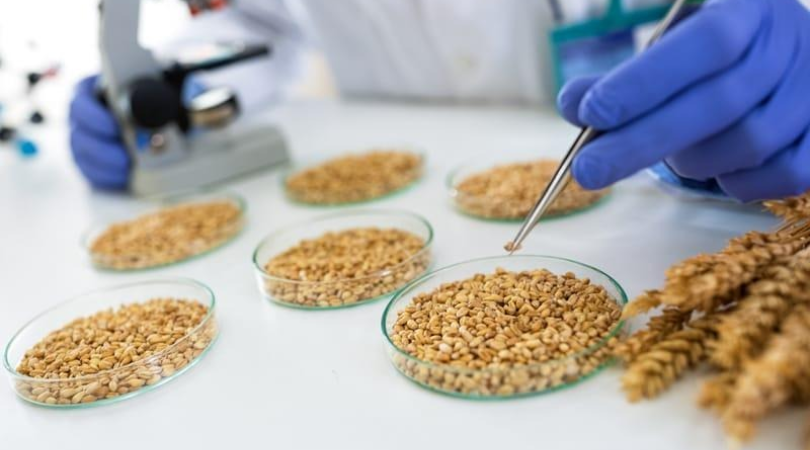
2.Build a Small Quality Corner and Keep Records
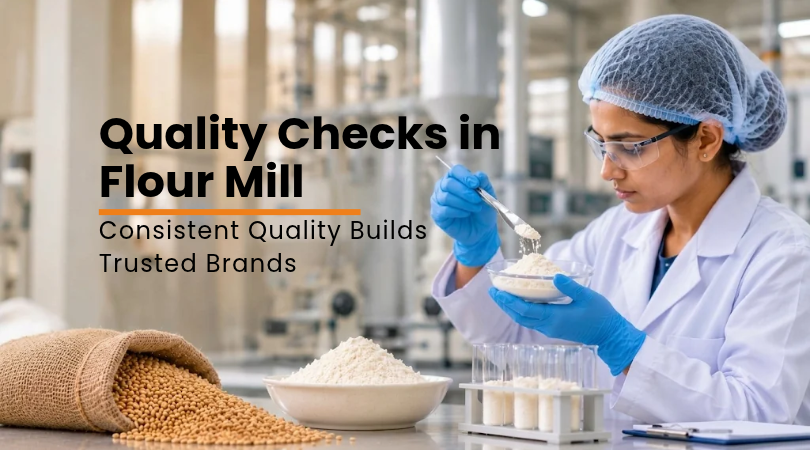
You don’t need a big lab. You need calibrated basics and discipline:
Moisture meter, precision scale, test sieves and sampling tools
A metal detector, magnet or sifter before packing
Clean premises, pest control and regular medical checks for staff who handle product
A functional laboratory is defined not by the sophistication of its equipment, but by its ability to conduct tests consistently, maintain accurate records, and provide verifiable evidence of compliance.
3.Check the Whole Flow, Not Just the Final Product
Quality control tests the product. Quality assurance checks the entire process. Check at five points:
Procurement: Moisture, foreign matter, pest, supplier history
Storage: Temperature, humidity, FIFO, pest control
Milling: Machine settings, yield, extraction, sieving
Packing: Weight, seal, label, batch code, metal detection
Sampling: Final sample, vehicle hygiene, documents
Real example: A rice shipment was rejected for excess broken grains. The root cause was uncontrolled milling settings and checks only at the end. The fix was to verify settings, sample during the process and approve every lot before dispatch.
The Final Insight:Quality Is a System, Not a Test
A good lab report tells a buyer your product passed once. A good system tells them it will pass every time. That difference decides who gets repeat orders, who gets the premium price and who gets the export contract..
Global buyers, large retailers and institutions don’t buy a sample. They buy a system and a track record. When they audit a mill, they are asking four questions:
- Can you prove it? Calibrated instruments and records written at the time of the check, not after.
- Can you trace it? Any lot tracked from raw material to finished pack, and recalled if needed, in hours rather than days.
- Can you repeat it? SOPs, trained people and process controls that give the same result on every shift.
- Does someone independent agree? A BIS licence, a food safety certification or a third-party inspection report that backs your claims.
A mill that consistently meets quality standards, maintains proper documentation and follows reliable production practices is better positioned to build buyer confidence, strengthen its market reputation and establish long-term business relationships.
Key Takeaway: Quality earns money only when it can be shown. Start with licences, calibrated tools, honest records and hygiene. Add the certifications your buyers value. Then let your records, your QR code and your inspection reports do the selling for you.