
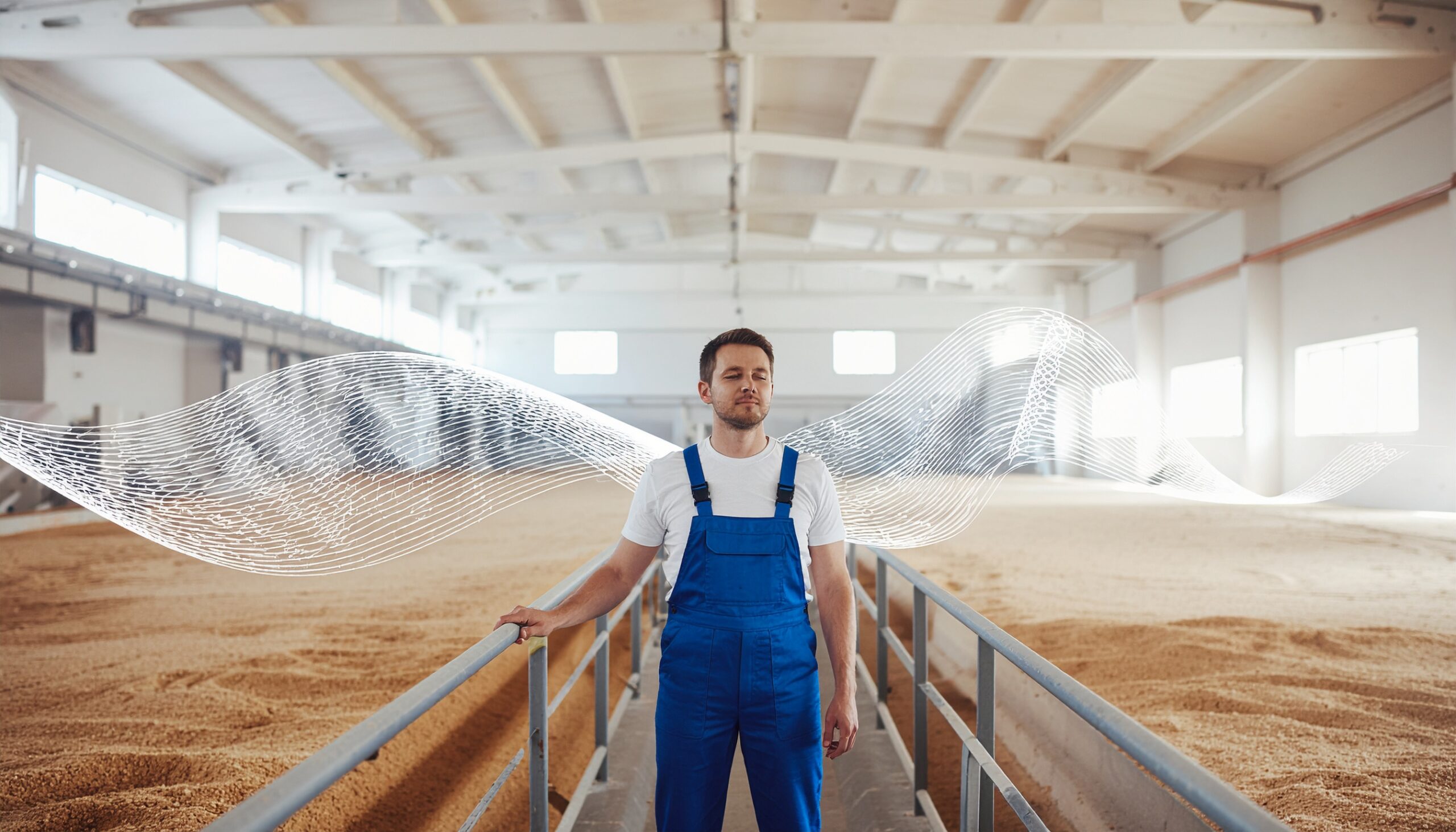
Walk into any flour mill or processing plant with a twenty-year veteran, and you will notice something peculiar. While a junior operator might immediately head for the control room to check the SCADA screen, the veteran stops at the door. They stand still for a moment, head tilted, perhaps placing a hand on a handrail or a window frame. They aren’t looking at the machines; they are “reading” the mill. To the uninitiated, a plant is a collection of loud, heavy equipment bolted to the floor. To an experienced operator, the plant is a living, breathing system with a distinct pulse. Learning to “see” the process instead of just the machines is the fundamental shift that marks the transition from a technician to a master miller.
The Beginner’s View vs. The Operator’s Insight
New operators often fall into the trap of “machine-centric” thinking. They see a sifter as a sifter and a roller mill as a roller mill. If a machine stops, they fix the machine. If a number on a screen turns red, they adjust a setpoint. While this is necessary, it is reactive.
Experienced operators, however, view the plant as a continuous flow of energy and material. They understand that a mill is a series of dependencies. A change in the temperature of the grain during tempering in the morning will manifest as a sifting problem in the afternoon. They don’t just see the machine in front of them; they see the ghost of the material that was there ten minutes ago and the potential of what it will become ten minutes from now.
What Experienced Operators Notice First: The Sensory Language
Before a sensor ever triggers an alarm in the control room, the mill usually sends out dozens of subtle signals. Mastering the “sensory language” of the plant is the first step in learning to see the process.
1. The Acoustic Signature (Sound)
Every plant has a “base hum.” When the mill is balanced and running well, the sound is rhythmic and consistent.
- The “Heavy” Sound: A deep, labored thrumming often indicates that a machine is being overfed or that a lift is struggling with a high load.
- The “Metal-on-Metal” Shrill: A high-pitched whistle or screeching often signals a misaligned belt, a dry bearing, or a roll gap that has closed too tightly.
- The Absence of Sound: Sometimes, the most terrifying sound in a mill is silence where there should be the gentle “tink-tink” of material hitting a spout.
2. The Feedback of the Floor (Vibration)
Experienced operators often “feel” the mill through their feet.
- The Rhythmic Pulse: Sifters have a distinct orbital vibration. If that rhythm becomes erratic or “jerky,” an experienced operator knows a weight has shifted or a screen is blinded before the motor ever draws extra amps.
- High-Frequency Buzz: A “sharp” vibration in a handrail often points to a high-speed bearing failure long before it begins to smoke.
3. Visual and Olfactory Cues (Sight and Smell)
- Dust Patterns: The way dust settles on the outside of a spout can tell you if there is a pinhole leak or if the aspiration system is losing vacuum.
- Stock Color and Texture: A master miller can tell the extraction rate simply by the “feel” of the flour between their thumb and forefinger. They look for the “brightness” of the stock; a duller, grayer hue suggests bran contamination that the lab might not catch for another hour.
- The Smell of Friction: There is a specific, “toasted” smell that precedes a fire or a major mechanical failure. If you smell grain “cooking,” something in the process has stopped moving while the machine kept turning.
Process-Level Thinking: The Ripple Effect
To see the process is to understand that no machine exists in isolation. Experienced operators think in terms of upstream and downstream effects.
Imagine an operator notices that the “tails” stream at the end of the mill is too heavy.
- The Beginner’s Response: Tighten the last set of rolls to grind the material finer.
- The Veteran’s Response: They look upstream. They might find that the primary break rolls are slightly open, causing the subsequent machines to “over-work.” By adjusting the first machine in the sequence, they balance the entire mill.
Indicators of a Balanced Process:
- Consistent Stream Thickness: Viewing windows show a steady, “fluid” flow of material rather than “surging” or “slugging.”
- Uniform Equipment Temperatures: A machine running significantly hotter than its neighbors is often “fighting” the material rather than processing it.
- Balanced Aspiration: The air system should feel “tight.” Excessive dust in the air or at the base of machines suggests the pneumatic balance is off, affecting sifting efficiency.
How to Train Your “Operational Eye”
Operational intuition isn’t a gift; it is a skill developed through deliberate practice. For those new to the industry, “seeing the process” can be learned through a few simple habits:
- Get Out of the Control Room: Screens provide data, but the floor provides truth. Spend at least 20 minutes of every hour walking the line without looking at your phone or a tablet.
- Touch the Stock: Regularly sample material at every stage of the process. Understand how the grain changes from the first break to the final sifter. If you don’t know what “right” feels like, you won’t recognize “wrong.”
- Shadow the Veterans: When an experienced operator makes an adjustment, don’t just watch what they do—ask them why they noticed it. Usually, they saw something five minutes before you did.
- Study the “Lag Time”: Learn how long it takes for an adjustment at the start of the plant to reach the end. This prevents “over-correcting,” which is the most common mistake of junior operators.
Conclusion: The Art of the Balanced Flow
In the modern era of high-tech sensors and AI-driven monitoring, it is tempting to believe that the human element of “reading” a mill is becoming obsolete. The opposite is true. As plants become faster and more complex, the ability to recognize subtle patterns and behavioral shifts is more valuable than ever.
Great operators do not just operate equipment; they facilitate flow. They understand that a mill is a delicate balance of physics, biology, and mechanics. When you stop looking at the machines and start seeing the behavior of the process, you aren’t just a worker in a plant anymore—you are the conductor of a complex industrial orchestra.