Let’s get straight to the point: buying new machinery is expensive and time-consuming. But that doesn’t mean your mill has to stay stuck at the same output. If you’ve been wondering how to push your numbers up without opening your wallet, this is for you.
This week, I’m sharing practical ways I’ve seen operators increase mill output by up to 25% just by focusing on things they already have. We’re talking about smart use of VFDs (Variable Frequency Drives), better feeder control, and cutting out hidden inefficiencies that quietly drain your profits.
Why just adding machines isn’t the answer
If I had ₹1 lakh to spend today, I wouldn’t rush into buying new equipment. Most beginners make that mistake—thinking new machines are the fix-all. But the real gains come from tuning what’s already on your floor.
Here’s what actually happens in the first 30–60 days after you start focusing on process optimization instead of new gear:
- Better control with VFD + feeder: When you properly sync your VFD speeds with feeder rates, you can get a smoother, more consistent flow of materials. This reduces bottlenecks around your crusher or grinder — which means less downtime and more output.
- Process tweaks catch inefficiencies: You start spotting where the delays and backups are. Maybe the feeder is overfeeding at the start and choking the mill mid-run. Or the VFD isn’t calibrated right, causing fluctuations in speed and power use. Fixing these small problems quickly adds up.
Hidden inefficiencies cost you more than you think
One common blindspot I see: operators don’t realize how often their mills run below ideal load. It’s tempting to keep things running “safe,” but running under capacity quietly eats away at your profits.
In one case, a medium-sized mill was running at about 70% max output because the feeder was misaligned and the VFD speed wasn’t adjusted for the real feed rate. That translated to thousands of rupees lost monthly without anyone noticing.
Another common trap is unsold stock piling up because output quality isn’t consistent. If your mill flutters between speeds or feeds, quality drops, and buyers hesitate or demand discounts. So even if you crank up output, poor quality means lost sales.
Here’s what you should do next
- Check and sync your VFD and feeders every week. Don’t just set them once and forget. Small shifts happen, and they affect the entire line.
- Watch your mill load and power. If it’s too low, dig into why. Don’t accept running at 70% capacity as the norm.
- Record output quality daily and link it back to operational changes. If output volume rises but quality dips, you’re losing money, not gaining.
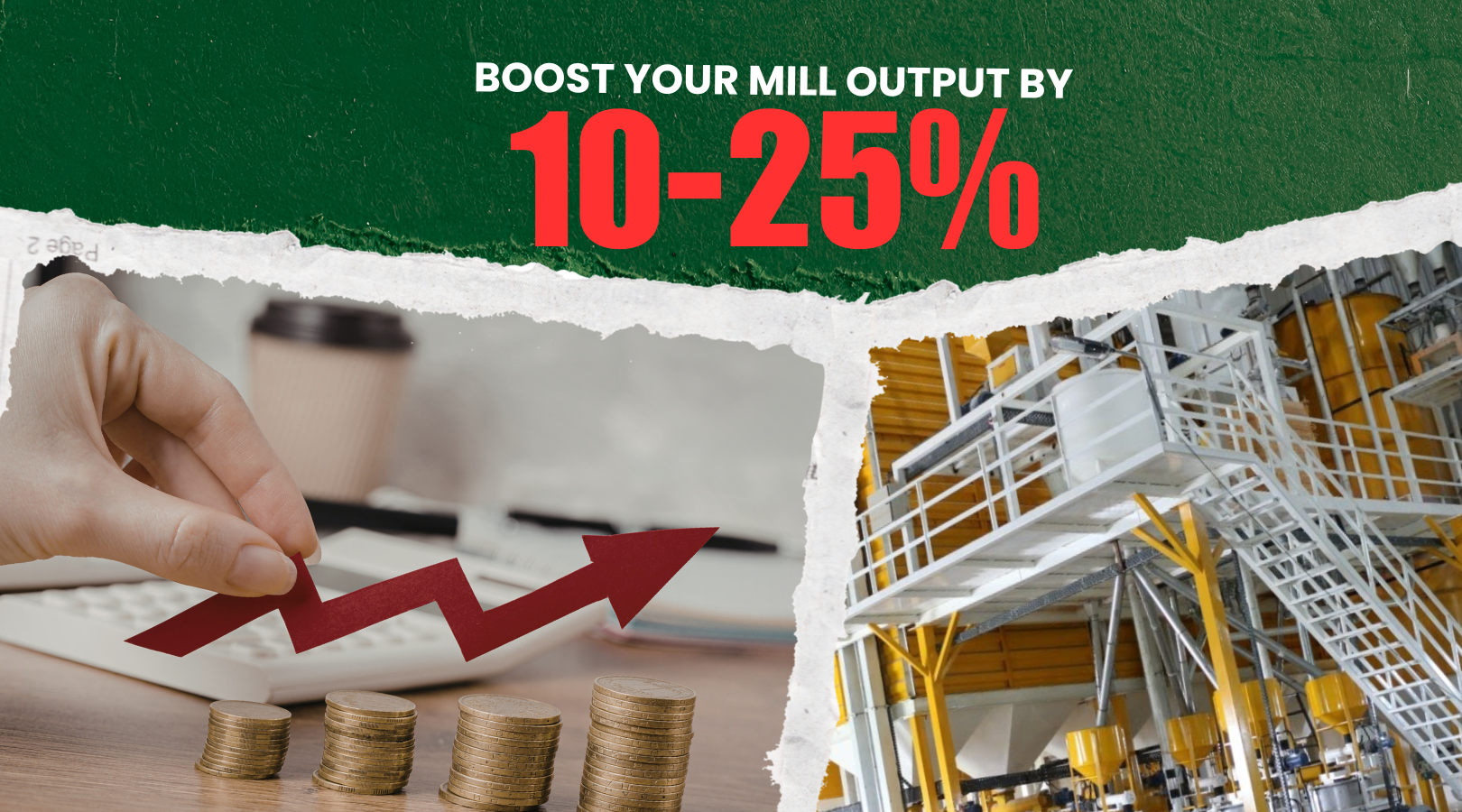
So next time you think about spending big bucks on new machinery, remember: better control and process tuning will usually get you 10–25% more output for free. And that’s money in the bank.
Want us to guide you how to increase production in your mill?
Contact us now and we’ll show you the proven strategies & steps to boost production output in your mill.
✅ Proven methods to increase productivity
✅ Common pitfalls to avoid in mill production
✅ Best practices for achieving optimal results consistent results.
R. S. Choyal
About the Author
R.S. Choyal is the CMD of Choyal Grinding Solution Pvt. Ltd., the new-age milling venture of the RS Choyal Group. With over three decades in the milling machinery industry, he has played a key role in modernizing flour milling in India and expanding it across 20+ countries.
Known for his technical expertise, he has led innovations in stone grinding, customized plant solutions, and energy-efficient systems. He also leads Brains Trust Society, where he shares insights on leadership, emotional intelligence, and purposeful living.