Let’s skip the usual runaround and get straight to what really matters when you’re deciding between a stone mill and a hammer mill. If you’re just starting out or upgrading your setup, this is for you. After months of watching setups, failures, and wins on the ground, I’m telling you—most people pick the wrong machine for what they want.
The real difference you need to understand
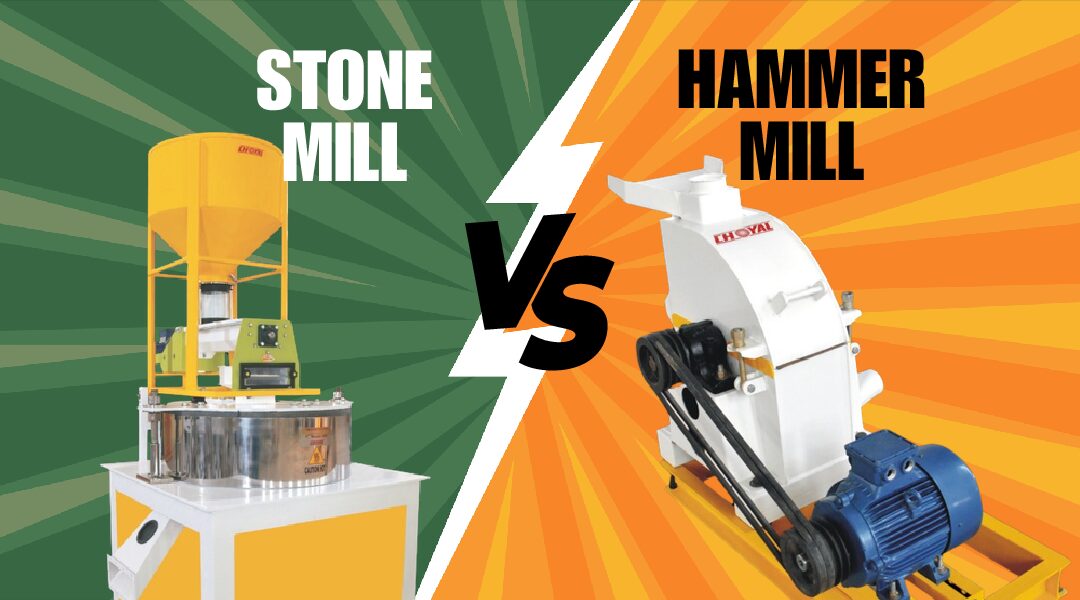
Stone mills (Chakki) and hammer mills do NOT do the same job, even if some sellers act like they do. The main difference is how they handle the grain and what kind of final product you get.
- Stone Mill:
- Two stones rotate and crush the grain.
- Grain is pressed + sheared.
- Feels like “grinding”.
- It’s gentle, preserving starch quality.
💡Think: like rubbing grain between palms slowly
- Hammer Mill:
- High-speed rotating hammers hit the grainHigh speed, sharp impact. Creates heat and can damage starch, affecting taste and texture.
- Grain is broken by impact
- Feels like “pulverizing”
💡Think: like smashing grain with repeated hits
For wheat flour - Stone mill
If you’re making atta (whole wheat flour for chapati etc.), go with a stone mill (chakki). It delivers better taste and texture because it doesn’t burn or overheat the flour. If you use a hammer mill, your chapatis can turn out dry or rough—a common complaint.
For animal feed - Hammer mill
But if your end goal is animal feed — then the hammer mill wins hands down. It’s faster and produces a consistent coarse grind, which animals like and digest well. Trying to get fine atta-quality flour from a hammer mill is a waste of time and money.
What happens when you use a hammer mill to produce atta for humans?
Most beginners make this mistake: they buy a hammer mill thinking it’s cheaper and faster. They start selling atta flour but quickly find customers rejecting the product. The flour tastes “off”, the color is dull, and it gets bad reviews.
What’s worse? They end up with unsold stock. Then the bills pile up: loans, raw grain purchase, electricity. Some shut down within 2 months, blaming the machine or market.
Stone mills may cost slightly more upfront, but they save you headaches. You get better product, loyal customers, and steady sales. In a grain mill business, your first customers decide whether you survive.
💡Trying to sell feed-grade flour as atta, or vice versa, kills your reputation fast.
My No-Nonsense Advice
If I had ₹1 lakh today to start a small flour mill business aiming for quality atta flour, I’d buy a good-quality stone mill and focus all my energy on building customers in the local market. Cheap grinders just take you backwards.
If you want to produce animal or poultry feed, go for a hammer mill but keep your expectations clear. Don’t mix feed and food milling in the same setup—it confuses both quality and customers.
Maintenance is key. Stone mills break down when stones aren’t maintained, and hammer mills lose sharpness quickly without routine care. Plan your maintenance from day one.
Final Takeaway
Most people don’t fail because of machines. They fail because they don’t match machine choice with the right product and market. Know what you want before spending a rupee.
Remember: a decent stone mill with loyal customers beats a cheaper hammer mill with empty shelves any day.
Still confused between a Stone Mill and a Hammer Mill?
Don’t risk choosing the wrong machine and losing customers. Get clear, practical guidance based on real mill setups and results.
✅ Choose the right machine for your product (atta vs feed)
✅ Avoid costly mistakes that lead to poor quality and unsold stock
✅ Learn how to get better taste, texture, and consistent output
✅ Set up your mill for long-term customers—not short-term trials
R. S. Choyal
About the Author
R.S. Choyal is the CMD of Choyal Grinding Solution Pvt. Ltd., the new-age milling venture of the RS Choyal Group. With over three decades in the milling machinery industry, he has played a key role in modernizing flour milling in India and expanding it across 20+ countries.
Known for his technical expertise, he has led innovations in stone grinding, customized plant solutions, and energy-efficient systems. He also leads Brains Trust Society, where he shares insights on leadership, emotional intelligence, and purposeful living.