If you’re thinking about setting up a flour mill on a ₹5 lakh budget, it’s easy to get caught up in the numbers and fancy machinery. But here’s the truth from someone who’s seen the frontline: starting a flour mill isn’t just about buying machines and hoping for the best. This week, we’re breaking down where your money actually goes, the difference between milling yourself versus outsourcing, and the biggest mistakes beginners make that often sink their business early on.
Milling vs. Third-Party: What’s Better?
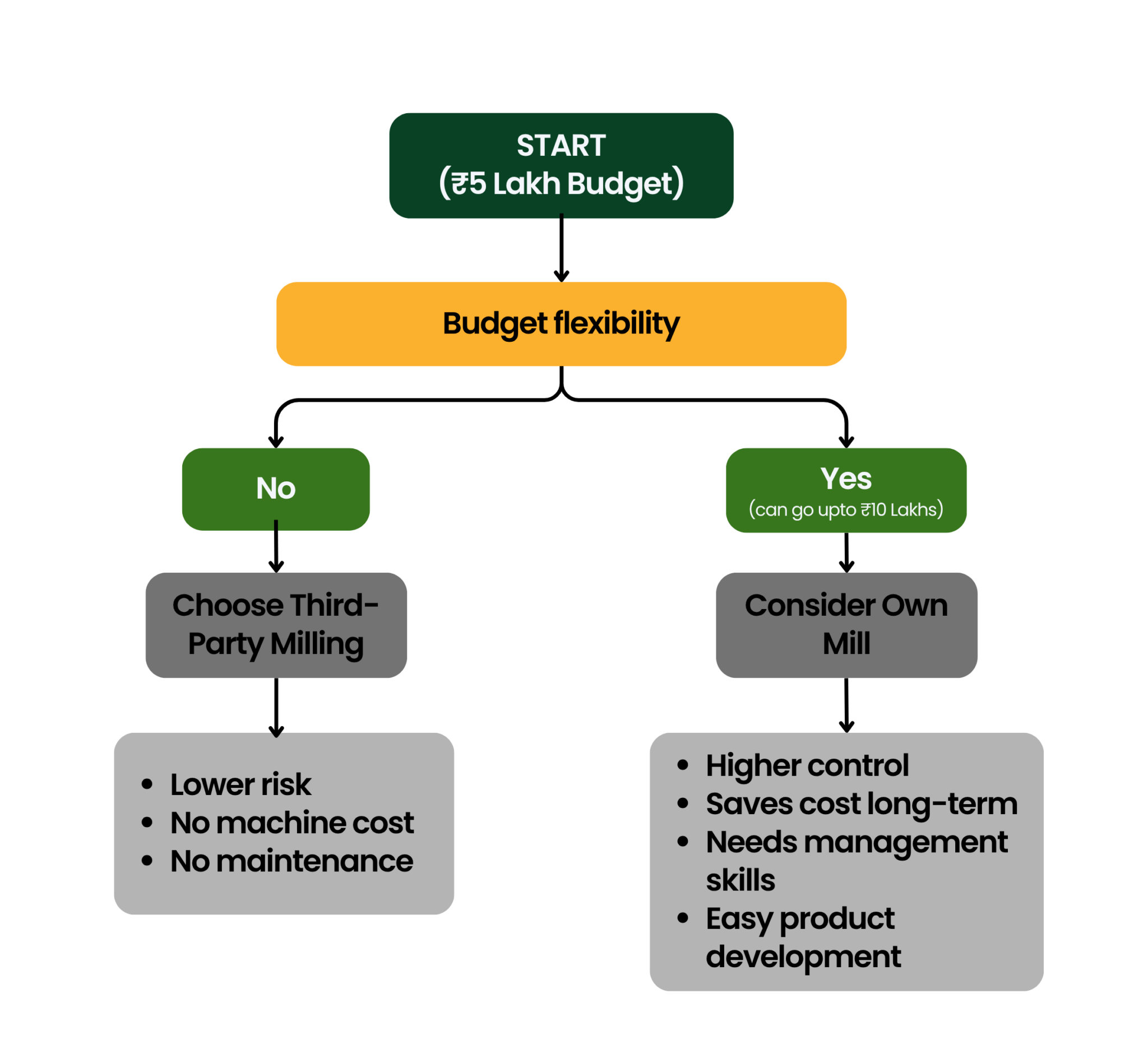
Here’s the first hard truth: If I had ₹5 lakhs today, I wouldn’t jump straight into buying milling machinery. Why? Because milling is just one part of the puzzle. Many people get stuck spending their entire budget on a small mill, only to realize they’re missing the bigger picture—selling the flour consistently.
Outsourcing milling to a third party might sound like giving up control, but it can be a safer choice at the start. You avoid the risk of machine breakdowns, maintenance headaches, and the initial capital blow. Instead, you focus on building your supply chain, quality control, and, most importantly, customer relationships. You can test your market first, see what kind of flour sells, and scale up milling only once you have stable demand.

That said, if your network is strong and you can manage operational challenges, owning a small but reliable mill can save on costs per unit long term. The key is not to rush into buying the biggest or the fanciest setup—you’ll pay more in hidden costs than you realize.
Where Does Your ₹5 Lakh Go?
Here’s a realistic budget split some new mill owners overlook:
| Category | Estimated Cost | Description |
|---|---|---|
| Machines and Setup | ₹3–3.5 lakhs | Basic small-capacity mill. Prices vary by brand, so choose carefully. |
| Raw Materials & Initial Stock | ₹50,000+ | Consistent, good-quality grain is essential for good flour output. |
| Packaging & Branding | ₹30,000–₹50,000 | Poor packaging can hurt sales—don’t overlook this. |
| Transportation & Distribution | ₹20,000+ | Timely delivery is crucial for maintaining customers. |
| Unexpected Costs | ₹20,000–₹30,000 | Repairs, electricity bills, or stock loss can happen quickly—keep a buffer. |
People who think ₹5 lakh can cover everything down to luxury equipment are in for a surprise. Most of your money goes into keeping the mill running smoothly, sourcing raw materials, and—most importantly—selling the flour.
Biggest Beginner Mistakes (Seen Them All)
- Investing in Machines Too Early : Many beginners put all their money into milling equipment without understanding market demand. The result? They either end up with machines sitting idle or flour that doesn’t sell fast enough.
- Ignoring the sales side: Your first customers decide if your business survives. Most people don’t fail because of machines. They fail because they can’t sell.
- Overproducing before demand exists: Unsold stock is a money trap—flour goes stale, price drops, and cash gets locked up. Plan production as per demand & then scale.
- Trusting credit too easily: Offering flour on credit without solid checks can drain your cash flow fast. We’ve seen new mill owners chasing payments instead of managing production.
What Actually Happens in the First 60 Days?
In my experience, the first two months are a learning grind. You’ll face these common issues:
| Challenge | Description |
|---|---|
| Machine Glitches | Expect minor breakdowns early on. Have a repair plan ready. |
| Raw Material Quality | Grain suppliers may be inconsistent; one bad batch can affect flour quality. |
| Sales Slow to Start | Even with good packaging, finding regular buyers takes time. |
| Cash Flow Crunch | Expenses go out quickly, but payments come in slowly, creating pressure. |
What Should You Do Next?
If you were to start today with just ₹5 lakhs, here’s the plan:
- Skip buying a full flour mill right away. Use a trusted third-party mill to begin. It saves cash and reduces headaches.
- Spend smartly on packaging and brand-building from day one. Good packaging attracts customers.
- Focus hard on building local buyers - small bakeries, eateries, or retail shops. Don’t just assume the product will sell itself.
- If you have more budget then invest in a quality flour mill preferably automated so you can control the quality of flour. Buy automated so your operations don’t become dependent on people.
- Track everything. Know exactly where your money goes every week.
Wrapping Up
To sum up, yes, you can start a flour milling business with ₹5 lakhs - but only if you’re clear about where that money goes and don’t rush into buying machines without securing customers. Remember, technical issues with machines can be fixed, but no sale means no business. Your first customers don’t just buy flour, they decide if you stay in the game. Next week, we’ll get into how to find reliable grain suppliers and negotiate better deals. Until then, keep your eyes on sales and not just machines.
Now how to select a 3rd party vendor for job grinding, contact us and we’ll give you the checklist and details of what to do & not do in job grinding.