
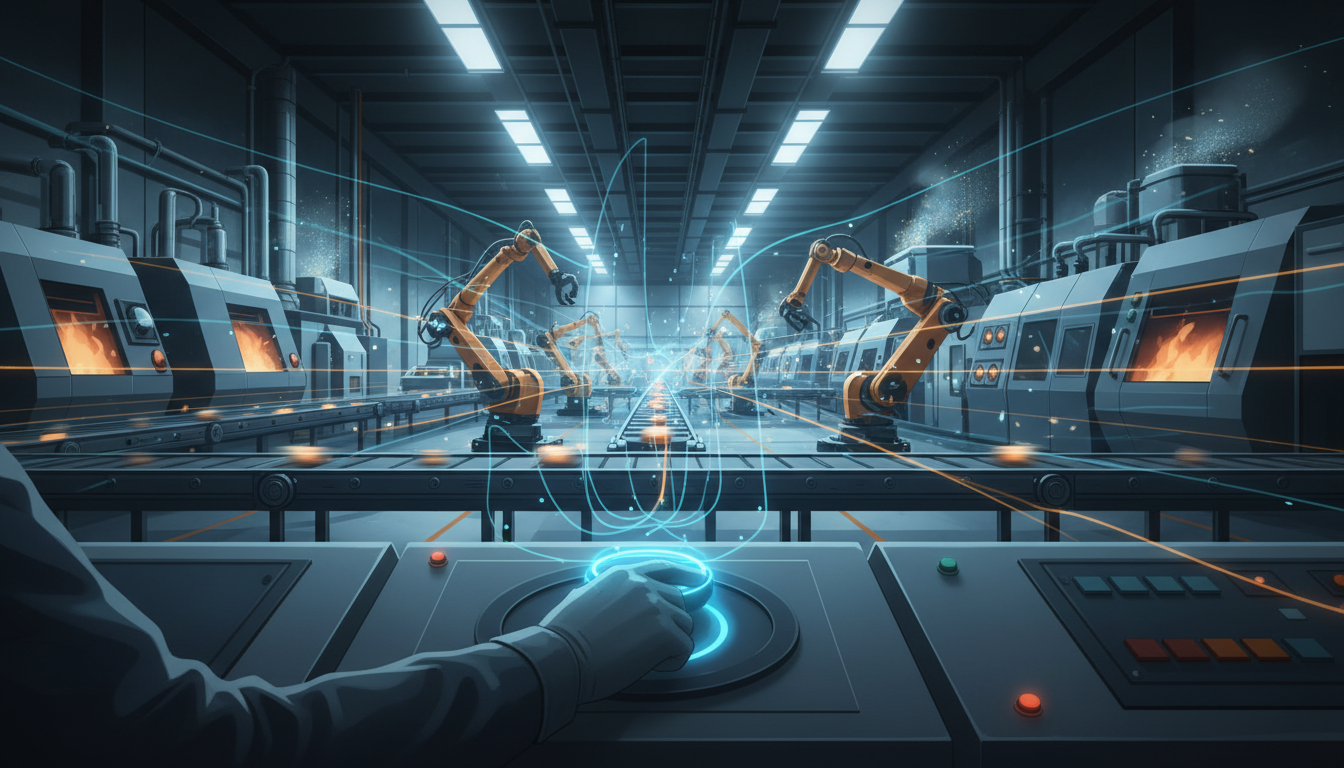
In the high-pressure environment of a processing plant, it is tempting to view a machine as a standalone island. If a product is coming out slightly too coarse, the instinctive move is to reach for the nearest adjustment wheel and tighten the gap. If production is running behind schedule, we bump the feed rate by five percent. On the surface, these seem like minor, local tweaks—isolated decisions made to solve immediate problems. However, in a continuous industrial process, there is no such thing as an isolated adjustment. Every turn of a wrench and every change to a digital setpoint sends a ripple through the entire system, triggering a chain reaction that can either stabilize the plant or send it into a spiral of “firefighting” and instability.
Understanding the “Butterfly Effect” on the plant floor is what separates an average operator from a master of the process.
The Myth of the “Local” Adjustment
In a modern plant, machines are connected by more than just pipes and conveyors; they are connected by physics and logic. What we call a “minor adjustment”—a slight change in roll gap, a minor increase in steam pressure, or a subtle shift in motor speed—is actually a change to the system’s equilibrium.
Why Small Changes Are Amplified:
- Continuous Flow: Unlike batch processes where errors can be contained, continuous systems pass the “energy” of an adjustment immediately to the next stage.
- High-Speed Interaction: Modern equipment operates at such high velocities that a 2% deviation at the start of the line can become a 20% error by the time it reaches packaging.
- Narrow Operating Windows: To maximize efficiency, we often run plants close to their physical limits. This leaves very little “buffer” to absorb the shock of a sudden change.
Common Adjustments and Their Hidden Chain Reactions
Operators often make “quick fixes” during live production to maintain targets. While these might solve the immediate symptom, the systemic cure is often much more complex.
1. Increasing Throughput to Meet Targets
When the feed rate is increased to “catch up” on production, the chain reaction is often immediate and negative.
- The Reaction: Residence time in dryers or mixers decreases. To compensate, temperatures must be raised, which increases energy costs and risks scorching the product.
- Downstream Effect: Sifters or separators become overloaded, leading to “carryover” where good product is lost to the waste stream.
2. Tightening Equipment Settings (Gaps and Clearances)
If a grind is too coarse, the operator tightens the rolls.
- The Reaction: This increases the mechanical pressure and friction, which generates heat.
- Downstream Effect: The warmer material can cause condensation in downstream spouting, leading to “pasting” or blockages in filters and sifters. What started as a particle-size adjustment ends as a three-hour cleaning shutdown.
3. Reducing Buffer Capacity or Dwell Time
In the name of lean manufacturing, plants often reduce the amount of material held in intermediate bins.
- The Reaction: The “dampening” effect of the bin is lost.
- Upstream Effect: Any minor hiccup at the intake now causes a total plant stoppage because there is no reserve to keep the machines fed.
The Systems Thinking Perspective: Upstream vs. Downstream
To manage a plant effectively, an operator must learn to look in both directions before making a change. Every adjustment has an Upstream Ghost and a Downstream Shadow.
- The Downstream Shadow: This is the most obvious. If I change the moisture at the tempering stage, I am changing the sifting efficiency an hour from now. Experienced operators ask: “Will the next machine be able to handle what I am sending it?”
- The Upstream Ghost: This is more subtle. Adjusting a machine can create “backpressure.” If a conveyor is slowed down to improve sorting, the material begins to pile up upstream. If the sensors aren’t perfectly tuned, this can lead to bin overflows or equipment “slugging” far away from where the adjustment was made.
The Danger of Feedback Loops
A classic chain reaction occurs when two operators on different shifts try to solve the same problem with different logic. Shift A tightens a setting; Shift B, seeing the resulting heat, slows the feed rate. By the time Shift C arrives, the plant’s “recipe” has been completely lost to a series of reactive feedback loops.
Practical Tips for Smarter Adjustments
Mastering the chain reaction requires a disciplined approach to the plant floor. Here is how to make adjustments without breaking the system:
- The “One at a Time” Rule: Never change two variables simultaneously. If you change the speed and the temperature at once, you will never know which one caused the resulting quality shift.
- Respect the Lag Time: Every system has a “memory.” After making a change, wait for at least two “residence cycles” (the time it takes material to travel from the start to the end) before making another move.
- Look Beyond the Machine: Before adjusting a machine, check the sensors on the machines immediately before and after it. Often, the “problem” you are seeing is actually a symptom of a failure elsewhere.
- Document the “Why,” Not Just the “What”: Instead of just recording that you increased the pressure, record why you did it and what the resulting downstream temperature was. This builds a library of cause-and-effect for future shifts.
Conclusion: The Plant as a Single Decision
In the world of industrial operations, the “minor adjustment” is a myth. Every action is a system-level decision. A great operator is not the one who can turn the most valves or click the most buttons; it is the one who understands how every thread in the industrial fabric is connected.
When we stop treating machines as isolated components and start treating the plant as a single, living organism, we move from a state of constant firefighting to a state of controlled, predictable excellence. In a real plant, small changes aren’t just tweaks—they are the beginning of a story that ends at the shipping dock. Make sure it’s a story you intended to tell.