


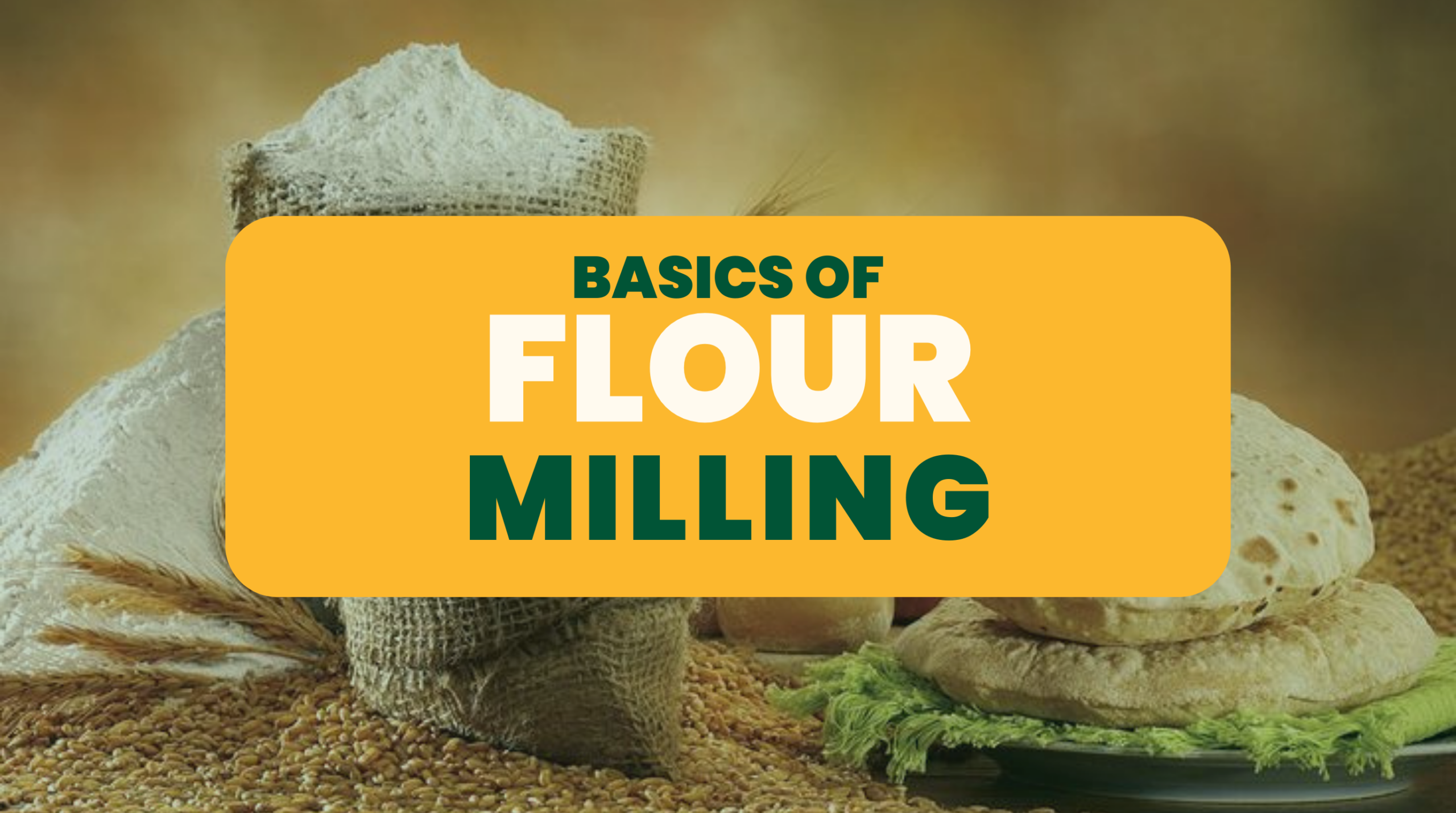
Basics of Flour Milling is an introductory course that explains how wheat is converted into flour in a clear and practical way. Overall, the course follows the complete flour milling process step by step. It begins with wheat receiving and cleaning. Then, it moves through milling, blending, testing, packaging, and finished product distribution. In this way, learners gain a clear view of the full milling cycle.
Understanding Wheat Quality
First, the course explains why wheat quality matters in flour milling. For example, learners understand how grain hardness, moisture, and protein levels affect milling performance. Moreover, the course explains how different wheat types are selected to produce flour for specific end uses. As a result, learners gain clarity on how raw material quality influences final flour output and consistency.
Milling Operations and Flour Functionality
Next, learners explore the connection between wheat chemistry and milling operations. In particular, they learn how grain structure and protein behavior influence grinding and extraction rates. Additionally, the course explains how milling decisions affect flour performance in real applications. Therefore, learners understand how process control improves product quality.
Coordination in a Modern Flour Mill
In a modern flour mill, teamwork plays an important role. For this reason, the course explains how procurement, production, quality assurance, warehousing, and distribution work together. Meanwhile, learners see how proper coordination between departments supports smooth operations. As a result, mills achieve consistent flour quality and efficient production.
Core Topics Covered
Furthermore, the course introduces essential milling concepts through structured lessons and simple explanations. At the same time, learners study both theory and practical applications used in real milling environments. In this way, the course builds strong foundational knowledge.
Key topics include:
-
Wheat classes and basic grain characteristics
-
Flour milling equipment and machinery functions
-
Mill flow sheets and process layout
-
Tempering methods and moisture control
-
Blending techniques for consistent flour quality
-
Flour testing methods and quality evaluation
-
Understanding extraction rates and milling efficiency
Who Should Take This Course
Finally, this course is suitable for students, beginners in the milling industry, entrepreneurs, and quality professionals. Overall, it provides a strong foundation in flour milling and grain processing. In addition, the course book is available in both English and Hindi. Therefore, learning becomes accessible to a wider audience across the milling and grain industry.
Module : Basics of Flour Milling
-
1Lesson 1 : Milling History
-
2Lesson 2 : Understanding the Raw Material
This chapter introduces wheat as a major cereal crop, explains the physical structure of the wheat grain, and highlights key quality parameters that determine its suitability for milling and food products.
-
3Lesson 3 : Quality and Characteristics of Indian Wheat
In this chapter, you will learn about wheat production in India, explore major wheat-growing zones and types, and understand key grain quality and physical purity parameters important for milling and food processing.
-
4Lesson 4 : Wheat Cleaning and Conditioning
In this chapter, you will understand why wheat cleaning is essential, learn about the cleaning section and impurity separation methods, and explore the role of conditioning in preparing wheat for efficient milling.
-
5Lesson 5 : Milling Process
In this chapter, you will learn the basic principles of wheat milling, explore different grinding methods, understand traditional stone milling and its maintenance, and gain insight into modern automatic milling systems used in today’s flour mills.
-
6Lesson 6 : Automation in Milling
In this chapter, you will understand how automation transforms traditional milling into an efficient, high-capacity process and learn the benefits of automated systems in improving quality, consistency, and productivity in flour mills.
-
7Lesson 7 : Flour (Atta) types and Composition
In this chapter, you will learn about different types of wheat flour and understand the key quality parameters used to judge flour performance and ensure it meets specific customer and product requirements.
-
8Lesson 8 : Flour Treatment and Fortification
-
9Lesson 9 : Quality Parameters
-
10Lesson 10 : Mill Maintenance
In this chapter, you will learn about different maintenance approaches, understand preventive measures and troubleshooting techniques, and explore essential safety and fire protection practices required for efficient and safe mill operations.
-
11Lesson 11 : Utility
In this chapter, you will learn about essential electrical equipment used in milling operations and understand energy management practices that help reduce power consumption, improve efficiency, and ensure safe plant operation.
-
12Lesson 12 : Packaging
In this chapter, you will learn about the methods and best practices for storing and packaging flour, and understand how these processes help preserve freshness, quality, and safety over time.
-
13Lesson 13 : Godown Management
In this chapter, you will learn the fundamentals of godown management, understand storage-related losses and quality control measures, and explore effective techniques for storing and packing flour mill products.
 Lessons: